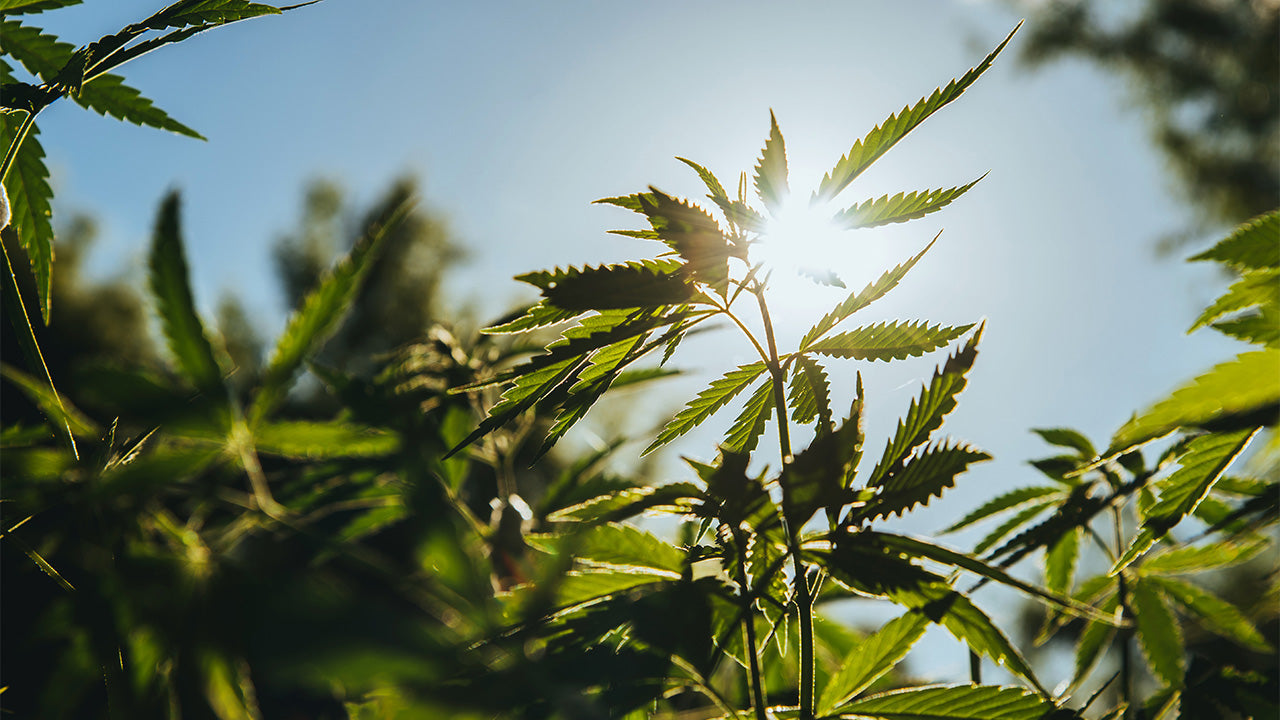
The Hemp Division prides itself on selling the highest-quality CBD products…and doing that means controlling the entire production process, from seed sourcing to CBD extraction.
Our fully controlled in-house process means that we’re able to eliminate reliance on third-party suppliers, manage every aspect of growth, and optimize cultivation: supervising the entire production process “from the roots up.”
This spring marked the start of another growing season in our Millerton, New York field. As our plants mature, we thought you’d enjoy learning a little more about how the growing process begins.
 Selecting the Right Hemp Seeds
We use two varieties of hemp seeds: Sylphina and Painted Lady.
Sylphina, developed by Davis Hemp Farms in Oregon, is a feminized CBD-rich hemp variety. “Feminized” means that this variety has been bred to produce only female plants…which is important for a couple of reasons.
For one thing, female plants produce significantly higher concentrations of cannabinoids (like CBD) than male plants do, which means more potent, more consistent CBD. Also, if a female plant gets pollinated by a male, its flowers produce seeds instead of resin. Keeping male plants out of our field simply makes our operation more efficient (sorry, guys).
Bred for consistency and high cannabinoid production, Sylphina grows into a medium-to-tall plant with dense, resin-rich flowers. The plant’s flowering period, triggered by shortening daylight hours in late summer and early fall, typically lasts eight to 10 weeks and finishes before New York’s hard frosts arrive in October.
Once transplanted into our field, Sylphina develops a broad, robust leaf canopy that helps block sunlight from opportunistic weeds. The variety is also valued for its reliable germination rates and uniform growth pattern, which makes crop management more predictable.
Painted Lady (another Davis Hemp Farms variety) is a feminized hemp strain known for its strong resin production and its ability to produce a high concentration of terpenes: aromatic compounds that contribute distinctive scents and flavors while enhancing the plant’s therapeutic benefits.
Compared to Sylphina, Painted Lady grows shorter, denser, and tighter together. Its flowering period (about eight or nine weeks) is over before frosts arrive, and the variety is resistant to our region’s humidity fluctuations.
Painted Lady also tends to produce more flower-bearing branches and nodes along each stem, creating more sites for flower development and increasing the plant’s yield potential.
Why Sylphina and Painted Lady Thrive in New York
Sylphina and Painted Lady tolerate New York temperatures well, and our region’s growing season (which offers approximately 140-160 frost-free days) gives both varieties plenty of time to grow and flower.
In addition to being available as feminized seed, both strains are photoperiod-sensitive, meaning that their developmental stages are triggered by how many hours of light they receive. This makes them suited to outdoor field production at scale without the need for light-deprivation infrastructure.
Lastly, their moderate four- to six-foot height at maturity makes harvesting and drying easier to manage.
How Many Seeds Does It Take to Grow a Hemp Crop?
We start off with about 3,300 seeds each of Sylphina and Painted Lady. We intentionally plant about 10% more seeds than we expect to grow, knowing that some seeds won’t germinate.
High-quality feminized hemp seed typically has a standard germination rate of 80 to 90%, which means we expect to get between 2,700 and 3,000 viable seedlings from the seeds we initially plant.
Why don’t some seeds make it? There can be any number of reasons. Some seeds simply aren’t viable. Others may be lost due to inconsistent seed-to-medium contact during planting. “Damping off,” a fungal condition, can sometimes kill seedlings in overly wet or poorly ventilated conditions. Some seeds are damaged by mechanical stress as they’re transplanted into trays. Finally, pests can take a toll…fungus gnats, in particular, can be a common greenhouse nuisance during the seedling stage.

From Seed to Sprout
We start our seeds in late spring, planting them ¼˝ to ½˝ deep in trays filled with a light, well-draining germination medium. We source this medium from a local organic farm, sometimes blending it with other materials if we need to lighten the mix.
The seed-filled trays are kept in our greenhouse, which has a consistent temperature of 70-80°F (the optimal range for hemp seed germination). Germination typically begins within three to five days and is largely complete within seven to 10 days. We don’t use any supplemental fertilizer at this stage, but we do supplement our natural greenhouse light with LED fixtures to create a consistent 18-hour photoperiod. This prevents seedlings from stretching once they emerge.  Caring for Young Seedlings
Watering plants, of course, is essential for their growth…but because overwatering is a leading cause of early seedling loss, we pay careful attention to the process. Using a gentle, low-pressure wand or misting nozzle to avoid stem damage, we keep the medium evenly moist but never waterlogged. As seedlings mature, we water more frequently to encourage root development.
In the greenhouse, seedlings thrive under 16-18 hours of light per day. As previously mentioned, we use LED fixtures to augment natural daylight hours in late April and May.
Five to seven days after the seedlings sprout, the plants’ first true leaves will appear. That’s when it’s time to start feeding them with fertilizer. The natural and organic substances we use include:
- Mycorrhizal Inoculants - Beneficial fungi introduced to the root zone early to establish a healthy symbiotic relationship
- Kelp Extract - A concentrated, nutrient-rich material derived from seaweed that provides micronutrients, natural growth hormones, and supports stress resilience
- Fish Emulsion - A nitrogen-rich liquid organic fertilizer that supports leafy vegetative growth
- Worm Castings Tea - An intriguingly named liquid fertilizer with a high concentration of nutrients, beneficial microbes, and natural growth hormones. As tea people, we know a thing or two about a good brew, though this one is best enjoyed by plants.
We fertilize at low concentrations (¼ to ½ strength) to avoid nutrient burn on the seedlings’ tender roots, and ensure optimal nutrient availability by keeping the pH of our irrigation water between 6.0 and 7.0.  Preparing Seedlings for the Field
It typically takes four to six weeks for a seed to become a transplant-ready seedling. To be ready for transplanting, a seedling must have three to five sets of true leaves, a height of four to eight inches, a sturdy stem that’s not elongated or “leggy,” and a well-established root ball that will hold its plug together when transplanted.
In the last week or two before field transplant, seedlings go through a process called “hardening off.” During this time, the seedlings are exposed to increasing amounts of outdoor air, wind, and direct sunlight: a process that reduces transplant shock by preparing the plants for the harsher, more variable conditions of field life.
Field transplant takes place in June, when the risk of frost has passed and the soil in our field has become warm enough to support vigorous root establishment.
Planting in June also takes advantage of the long summer days. Our hemp plants will keep growing for another six to eight weeks before the shorter daylight hours of late summer and early fall trigger flowering. That extended growing period will help maximize each plant’s yield potential before harvest.
 Time to Get Growing
I’ve offered more general overviews of our hemp growing process in the past (such as THD and CBD from Start to Finish), but I’ve enjoyed taking this more detailed look at our plants’ earliest stages…and I hope you have as well. Thanks for reading, and I’ll see you next post!