We don’t know about you, but we’re still recovering from the start of Daylight Savings Time. Much as we tried to “spring forward,” our spring was really more of a groggy, lurching stagger…and to be honest, we’re still struggling to figure out where that missing hour of sleep went.
Fortunately, World Sleep Day is coming up soon…just in time for us to draw attention to the important (and widespread) issue of sleep disorders.
Wake Up to Sleep Disorders
If getting a good night’s sleep is hard for you, you’re not alone. According to a 2023 Gallup poll, a startling 20% of Americans report that they get five or less hours of sleep a night…and the effects of sleep deprivation can go a lot further than dark circles under your eyes.
Not getting enough sleep can affect your mood, your memory, and your health. It can increase your risk for developing high blood pressure, heart disease, Type 2 Diabetes, dementia…even colorectal cancer.
As pointed out by the World Sleep Society (hey, somebody has to be in charge of World Sleep Day) sleep, like nutrition and physical activity, is a critical pillar of health. So what can you do to get more of it?
Forming Good Sleep Habits
Because we’re all different, there’s no single solution to improving sleep health…but consider the following behaviors as ways to ease your body into the land of nod.
- Avoid stimulation. Limit your intake of stimulants (like caffeine or nicotine) through the day…and especially close to bed time.
- Have a consistent bedtime. Sticking to a schedule and going to bed at the same time every night can regulate your body clock.
- Wind down. Reserve the hour before bedtime for relaxing activities like a warm bath, or meditating, or reading (preferably from non-glowing paper).
- Control your sleeping environment. Minimizing light (especially blue light, as in lights from phones and computers) can help, as can keeping your bedroom cool and quiet (and if “quiet” is too much to ask for, consider using white noise to control your space’s sound).
- Use your bed exclusively for sleeping. Working from your bed or watching TV from your bed can keep your body from associating “going to bed” with “going to sleep.”
There are also sleep aids to consider…and right now, we’re going to discuss two popular options: melatonin and cannabidiol (CBD).
Melatonin and CBD: Different Strokes for Different Supplements
Melatonin is a hormone produced naturally by the brain’s pineal gland. It regulates our circadian rhythms by signaling to our body that it’s time to get some shut-eye…and it’s widely available as a supplement to help people fall asleep faster.
Cannabidiol is a non-psychoactive plant extract derived from hemp. By interacting with the body’s endocannabinoid system, CBD reduces stress and physical discomfort, enabling better relaxation…and it, too, is available as a supplement.
Both are natural substances, both are considered safe for short-term, low-dose use, and neither one leads to intoxication.
The major difference is that CBD addresses underlying factors that can keep you awake, while melatonin directly impacts the body’s sleep-wake cycle (making it an especially good solution for people with jet lag or those who work second- or third-shift jobs).

The ABCs (and ZZZs) of Melatonin and CBD
Melatonin doesn’t automatically make you sleepy. Instead, it sends a message to your brain to get you ready for sleep…which means that you should take a melatonin supplement 90 to 120 minutes before you actually want to fall asleep.
One thing to be aware of: melatonin hangs around your system for five or six hours…and if your alarm goes off before those five or six hours are up, you may have a bit of brain fog to power through on your way to the shower.
CBD, for its part, has a calming effect on the nervous system and seems to boost serotonin levels in the brain. When serotonin levels are balanced, people feel calmer and less anxious, which can help them battle insomnia.
Also, some studies have shown that people with insomnia may have high cortisol levels at night…a condition associated with episodes of nighttime wakefulness. Researchers found that cortisol levels decreased more significantly when participants took CBD oil, suggesting that CBD may affect the release of cortisol and possibly act as a sedative (our previous blog, Does CBD Help You Sleep?, can tell you more about this).
While some CBD users have reported occasional side effects (such as next-morning drowsiness resulting from a higher-than-usual dose), those effects are typically mild. Take our CBD Quiz to see dosage or products are the best for you.
In sum: CBD and melatonin are both valuable individually…and, although there is limited research on the subject, it appears that the two supplements may even be able to work together, as CBD relaxes your body and melatonin eases you into sleep.
We do, however, have a few warnings to offer. If you’re pregnant or breast feeding, the U.S. Food & Drug Administration strongly advises against CBD use—and they suggest you talk to your health provider before taking melatonin during this period. In addition, both CBD and melatonin have the potential to interact negatively with alcohol and certain medications. As a general rule, we’d suggest that you consult with your healthcare professional before taking any kind of new supplement.
What Do You Give the Person Who Has Everything (Except Rest)?
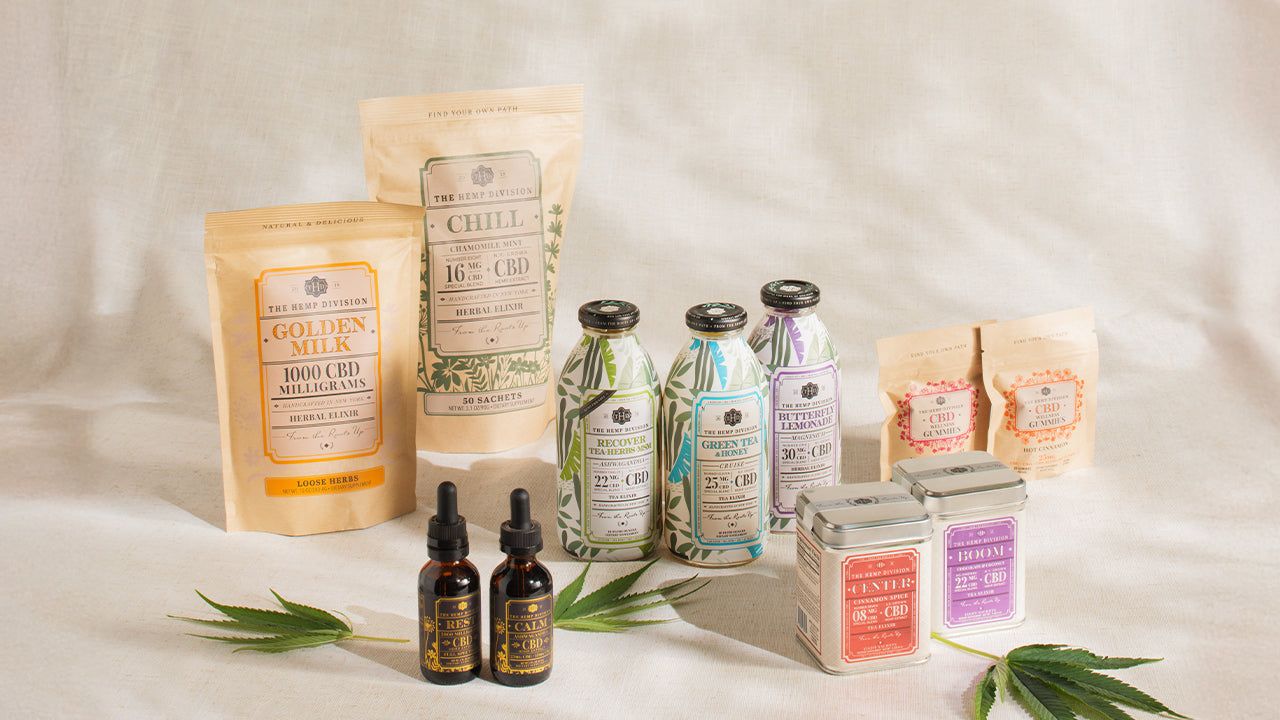
Traditionally, World Sleep Day hasn’t been much of a gift-giving holiday…but that could all change right now. If you know someone (including yourself) who struggles to fall asleep, our Rest Collection is filled with all sorts of ways…many of them CBD-infused…to lure the sandman.

Teas & Elixirs
• Holy Basil & Coconut – Sleep – Ease into rest with this softly soothing hemp-powered blend of holy basil, moringa, and coconut…elevated even further with hemp flowers, hemp leaves, goji berries, and a whisper of nutmeg. Infused with 25 mg of CBD per sachet.
• Turmeric Ginger – Calm – A comforting herbal elixir crafted to quiet the mind and relax the body, combining bright, spicy ginger with grounding, earthy turmeric. Infused with 9 mg of CBD (per sachet).
• Soba Elixir – Soba (the Japanese word for buckwheat) is a naturally gluten-free, grain-like seed. We’ve blended it with our own homegrown hemp extract to create a nourishing, calming experience. Infused with 1000 mg of CBD (20 mg per tablespoon).
Gummies
• Hot Cinnamon Gummies – Melt away stress and settle into cozy calm with these warming, spicy gummies made with three non-intoxicating cannabinoids. CBD (cannabidiol) provides stress relief and anti-inflammatory properties, while CBG (cannabigerol) eases discomfort, and CBN (cannabinol) encourages relaxation and restful sleep. Infused with 25 mg of CBD, 10 mg of CBD, and 2 mg of CBN.
• Matcha Raspberry Gummies – Crisp matcha (made from specially grown green tea leaves) pairs with juicy raspberry to create a refreshing flavor experience. CBD (cannabidiol) offers stress relief and anti-inflammatory benefits, as CBN (cannabinol) encourages relaxation and restful sleep. Infused with 25 mg of CBD and 10 mg of CBN.

Tinctures
• CBD Hemp Extract Tincture – Calm – Ashwagandha – Long valued in traditional wellness practices, ashwagandha root supports tranquility, mental clarity, and emotional balance. Infused with 25 mg of CBD and 15 mg of CBC (another valuable non-intoxicating cannabinoid found in the hemp plant).
• Extra Strength CBD Hemp Extract Tincture – Rest – A fast-acting, full-spectrum formula designed to ease stress and promote deep, restorative sleep, this product is made with hemp extract and coconut-derived MCT oil. Infused with 3000 mg of CBD.
Explore our entire Rest Collection to find even more ways to stop stressing and start snoozing.
Next Stop, Dreamland
If counting sheep hasn’t been adding up to real relaxation, we hope this blog gives you a few new ideas about the ways in which CBD and melatonin can help. Here’s to fewer tosses and turns…and a lot more sweet dreams.